
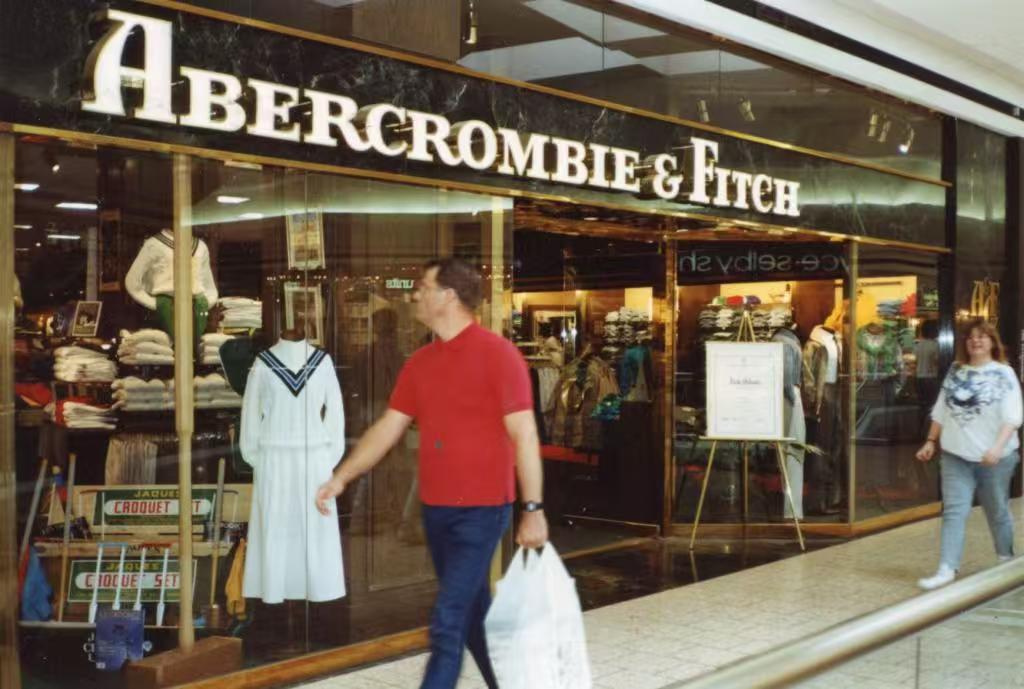
Abercrombie & Fitch (A&F): From the Presidential Outdoor Store to the Controversial Symbol of Youth
A&F was founded in 1892 in New York by David Abercrombie, who opened a high-end outdoor goods store catering to the elite who engaged in hunting, fishing, and camping. In 1904, wealthy lawyer Ezra Fitch joined in, officially naming the brand Abercrombie & Fitch. The early customer list was a veritable "Who's Who": President Theodore Roosevelt, explorer Lindbergh, and writer Hemingway all wore its gear for hunting and exploration.
During World War II, A&F produced uniforms for the US military. After the war, the trend of casual wear shifted, and the brand gradually declined. It went bankrupt in 1977. In 1988, it was acquired by The Limited, and CEO Mike Jeffries completely redefined it as a sexy, elite American youth brand: the stores were dimly lit, the perfume smell was strong, and the models had extremely high physical standards. It focused on creating an exclusive sense of "only cool kids can wear it". From the 1990s to the early 2000s, A&F became the standard for American college students, with annual sales skyrocketing to several billion dollars.
Curiosity: Jeffries once publicly stated, "We don't make clothes for fat people," which sparked a huge public outcry, being criticized as racial and body discrimination. After 2010, young people's aesthetic preferences shifted towards inclusiveness and diversity, causing A&F's sales to plummet and many stores to close. In 2014, Jeffries was forced to step down. In recent years, the brand has undergone a "self-revolution": it stopped using sexy marketing, expanded sizes, and used ordinary-stature models in its advertisements. It successfully regained popularity and became a typical case of a century-old brand's comeback.
Welcome to Kcywear, your gateway to fashion stories
At Kcywear, we showcase the rich narratives behind renowned fashion brands and provide curated recommendations for timeless pieces that resonate with style enthusiasts.
